Introduction We are currently navigating a time frame of uncertainty, shaped by rising geopolitical tension, economic and ecological risk, causing inflation and war. We are in a transition time, with chaos and intolerance. We see e rapid acceleration of Artificial Intelligence manipulating and algorithmic steering, even in the world of interiors. It is hard to distinguish between fake and reality.
Interest in colour provides comfort during these times. Sustainability and longevity are key priorities. Textures like ribs, ridges, flowing lines, and dynamic patterns are present across all themes. Gradients are also central, with flowing applications of both colour and form. Textiles play a crucial role in offering warmth and emotional support. Alongside new carpet shapes, expect to see creatively designed tiles gaining significance. The first theme, “Warm & Soft Minimalism,” features rounded and organic forms, Japanese influences, and timeless neutral hues combined with earth tones. The second theme, “Fluid Transitions,” highlights soft pastels, synthetic materials, gradients and transparencies. The third, “Global Craftmanship,” revisits traditional cultural aesthetics with a contemporary edge, expressed in warm, earthy colours. The fourth, “Radiant Energy,” shows gradients, and modern art, featuring bright, energetic tones. The fifth theme, “Nature is calling,” is inspired by natural elements and ecoconscious materials, presented in greens, sand, terra, and clay tones.
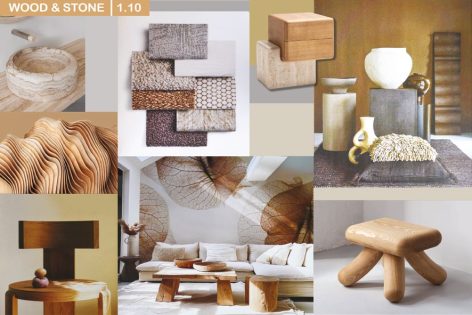
The sixth and final theme, “Modern Heritage,” celebrates personal expression. Retro influences and uniqueness through luxurious, bold colours. 1. Warm and Soft Minimalism The first theme, titled “Warm and Soft Minimalism“presents a refined yet inviting approach to contemporary interior design, where minimalist principles are softened through warmth, texture, and sensory richness. A palette of soft neutral tones is subtly enriched with earthy hues, generating a calm, balanced, and welcoming atmosphere. This color foundation supports a design language characterized by flowing curves, organic shapes, and gently rippled surfaces that introduce movement and softness throughout the space. Texture plays a defining role and is integrated across nearly every element of the interior.
Textiles are especially important, contributing both visual depth and tactile comfort. Carpets appear in irregular and asymmetrical forms, reinforcing the organic character of the theme. Pillows feature sculptural tufting, while curtains display expressive weaves, pleats, and intentional irregularities. Beyond their aesthetic appeal, these textiles enhance acoustic comfort and spatial quality. A thoughtful contrast is created between smooth, refined materials such as wood, marble, and stone and richer, more irregular textures. Materials like bouclé, ribbed fabrics, and undulating finishes introduce craftsmanship and subtle imperfection. Ceramic tiles gain prominence through whimsical, sculptural shapes, while murals and textured wall coverings add depth. Rooted in Scandinavian minimalism and enriched by Japanese aesthetics, the theme emphasizes balance, softness, and tactile warmth. 2. Fluid Transitions In the second direction, “Fluid Transitions,” gradients, subtle colour shifts and layered transparencies dominate, often presented in soft, light pastel tones. These visual effects create depth and a sense of movement across surfaces.
This impression is reinforced by the materials used, predominantly synthetic ones like glass, acrylic, polyester resin, and plastic. Recycled polyester is also frequently utilized. These materials enhance the luminous and reflective qualities of the designs. The theme is also expressed through textiles, where gradients and transparencies are applied to curtains, upholstery and decorative accents such as cushions and throws. Wavy lines, ribbed textures and serrated edges appear frequently in furniture and accessories, adding rhythm and visual interest. Mirrors, frames and lighting designs often feature rounded silhouettes and reflective or iridescent finishes, amplifying the play of light and colour.
Illuminated objects emphasise smooth transitions and glowing effects, sometimes recalling liquid or misty forms. Small pieces of furniture, such as stools and side tables, are especially popular and display whimsical, sculptural shapes. Overall, rounded forms, layered materials and shimmering surfaces define this direction, creating interiors that feel light, futuristic and softly dynamic. Architectural features reflect this theme through the use of arches, circular forms, and curved shapes. 3. Global Craftmanship In contrast to the growing importance of Artificial Intelligence, which often creates a smooth, impersonal feel, “Global Craftsmanship” is gaining value again. The human hand, with all its imperfections, sparks the imagination through irregularities, fringes, hand stitching, and visible repairs. Each piece carries a story: a woven edge that isn’t perfectly straight, a glaze that pools, a dye that fades unevenly, signals of authenticity rather than flaws. These products appeal to people who want to express their ethnic background, personal style and taste, or the exotic places they have visited, memories they want to keep and highlight. Materials are mainly natural, such as wood, stone, cork, raffia, reed, linen, jute and hemp, bamboo, and seagrass, and are often sourced from recycled materials or local leftovers. Traditional patterns and techniques such as ikat, tie-dye, tufting, shibori, and sashiko embroidery, are applied in contemporary ways, scaled up, mixed, or refreshed with new colour palettes.
Typical products include textiles, rugs, pillows, ceramics, tiles, kilims, masks, murals, and lamps, sometimes with sculptural shapes, tactile surfaces, and a sun-warmed patina. We see ancient prints, weaves, and techniques inspired by native peoples, alongside baskets and vases influenced by African design or primitive forms. The combination of indigo blue and white is a classic. We will see also new colour combinations applied on traditional prints. 4. Radiant Energy This trend direction, called “Radiant Energy”, is defined by bright, luminous colour. Colour is becoming increasingly important in interiors as an antidode. While using bold colour can take confidence, it will play a growing role, through painted walls, murals, and coloured lighting such as LEDs. Advances in rendering and Artificial Intelligence make it easier to visualise and apply these effects. For smaller elements, such as accessories, colour is even more accessible. We see gradients, overlapping colour fields, and the dramatic impact of coloured light.The direction focuses primarily on man-made materials such as glass, perspex, polyester resin, and a range of plastics.
Gloss, shine, and reflective metallic finishes are key, expect mirror-like objects and highly polished surfaces. Simple geometric motifs bring a sense of joy and decoration: stripes and stripe variations, dots, triangles, facets, curves, steps, and colour blocking. Iconic designs are reinterpreted in fresh colourways, sometimes paired with black and white to connect to historic art movements such as Op Art, Pop Art, and Memphis. Shapes are rounded, with flowing lines, curves, and ribbed detailing. As before, unexpected rug silhouettes continue to appear. We also see colourful ceramic forms stacked on a pole, totem-like pieces that add playful height and sculptural presence. Small, adaptable furniture pieces like stools and side tables are crucial in creating flexible interiors. 5. Nature is Calling Within the style story “Nature is Calling,” the focus shifts to living more consciously with our environment. Sustainability, mindful buying choices, and the urgency of climate change are at the heart of this theme. It’s about shrinking our ecological footprint by exploring new, lowerimpact materials. Think fungi, corn, banana leaves, bamboo, cardboard, vegan leather, and by-products from the food industry such as coffee grounds. Renewable fibres and natural resourcea such as linen, hemp, raffia, rattan, and wood, remain essential, alongside a stronger commitment to recycling.
Nature itself, from flora to fauna, remains a leading source for decorative statements. Wallcoverings, posters, cushions, and home accessories are brought to life with botanical and animal-inspired motifs. Prints highlight plants and foliage, as well as insects, birds, and butterflies, often finished with a subtle, nostalgic feel. A revived fascination with untamed landscapes sometimes comes through a historical perspective. It explores exotic trees, palm plantations, vivid birds, and tropical blooms, paired with tigers, monkeys, jaguars, and underwater creatures.Green leads the palette for its calm, restorative character and appears frequently in wall paint. Botanical prints with the look of vintage natural-history illustrations are especially in demand.
Rugs and textile wall pieces take on surprising silhouettes, often shaped by floral references. Raised textures and relief, tufting, carved effects, and high/low surfaces, add depth and tactility. Green shades are often balanced with grounded, earthy terra tones. 6. “Modern Heritage” draws from opulence, glamour, nostalgia, and historical references to create interiors that feel deeply personal and expressive. This style celebrates cherished objects, heirlooms, and one-of-a-kind discoveries, with retro influences adding depth and character. It serves as a sanctuary from the chaos of the outside world. Gold accents, whether as delicate lines or subtle details, are essential, echoing the sophistication of Art Deco patterns in wallpapers and textiles.
The tradition of the cabinet of curiosities remains central, inspired by natural history, scientific illustrations, botanical art, and exotic collections. Think taxidermy, rare minerals, coral, seashells, glass domes, and fragments of classical statues from ancient Greece and Rome. A contemporary twist introduces luminous effects on dark backgrounds, iridescent finishes, colorshifting surfaces, aurora-like lighting, and oil-slick textures. Mid-century furniture remains a staple, especially in plush velvets accented with gold or copper. Materials like leather and metallics also play a role. Deep, moody paint colors set a dramatic stage, while luxurious materials such as marble and tiger’s eye, whether authentic or imitated, add refinement. Acoustic comfort is still a consideration. Traditional embroidery, velvet fabrics, and heritage patterns enrich the space. The interplay between matte textures like velvet and reflective elements, glass, mirrors, crystal, and metals such as gold, brass, and copper, creates a dynamic, visually engaging interior.