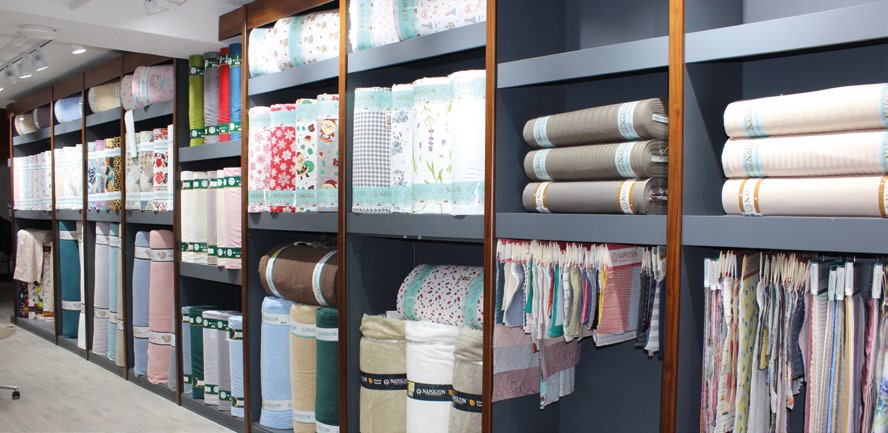
Can you tell us about İSA Tekstil’s journey from its establishment to today? What were the breaking points in this process?
My journey in the textile sector began in 1996, at the age of 13, in our family company. Until 2017, I worked actively in the family business, during which time I managed and grew the operation. Transitioning into production in the early 2000s became a significant turning point for us. By sourcing our own yarn and completing the processes of subcontracted weaving and dyeing before turning them into finished products, we directed 90 percent of our sales toward exports.
While we initially exported to 4–5 countries, we increased this number to over 35 by 2017. In the same year, I decided to part ways with the family business to chart my own path and founded İSA Tekstil. Today, we continue our operations in the home textile sector with our own brand, Napolyon. This decision became one of our most important breaking points, both personally and corporately.
What are the core areas of expertise that differentiate İSA Tekstil in the sector? Could you tell us about the product groups and markets you focus on?
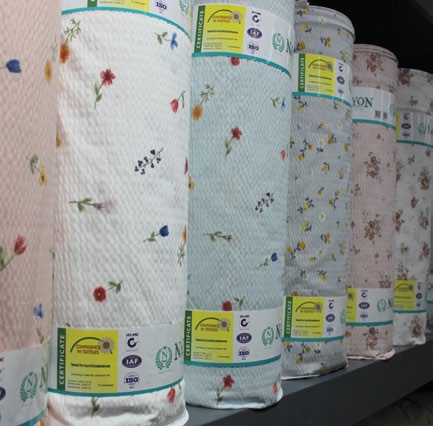
At İSA Tekstil, we primarily produce cottonbased products. Approximately 90 percent of our products consist of natural fibers. Since home textile products come into direct contact with human skin, healthy production is a priority for us. In this regard, we pay particular attention to ensuring that the chemicals we use are harmless to human health and certified with OEKO-TEX standards, and we work with printing and dyeing facilities that meet these criteria.
Our product range includes bed sheets, duvet cover sets, and quilts in the home textile segment; while in hotel textiles, we offer sheets, duvet covers, quilts, and covers. In addition, we also have product groups for hospital textiles. Through our Napolyon and Davinci brands, we provide services to our customers across three different segments.
In the context of changing customer expectations and global competition, which strategic areas does İSA Tekstil prioritize?
Türkiye’s former price advantage has largely disappeared today. For this reason, we focus on differentiation through design, quality, and patterns in competition. By maintaining the highest standards in cotton, dye, and chemical quality, we separate ourselves from the market. Today, the key factors that set us apart are our high-quality approach, original designs, and attention to detail.
What are your plans for the upcoming period in terms of sustainability, artificial intelligence, and digitalization?
Since the day we established İSA Tekstil, digitalization has been an integral part of our business. In the coming period, we plan to continue our investments in artificial intelligence and digitalization in line with our sustainability goals.
We observe that, across Türkiye, the sector’s machinery parks are largely equipped with
state-of-the-art technology. However, on a global scale, the biggest challenge remains price competition. At this point, we aim to achieve a competitive advantage by differentiating through product diversity, brand strength, and quality. In line with our 2026 plans, we aim to grow while maintaining our position in the sector with new products and designs. Throughout this process, technology will continue to be our greatest supporter.
Could you share your 2026 growth targets? How will the domestic market and exports shape these goals?
Since our establishment, our priority has always been foreign markets. Today, approximately 90 percent of our turnover comes from exports, while 10 percent comes from the domestic market. We have prepared our plans for 2026 in a way that preserves this balance.
As İSA Tekstil, we focus on being minimally affected by crises. We deliver our brands to nearly every continent and maintain a strong market presence in certain countries. In this direction, we participate in an average of five international trade fairs each year, in addition to conducting commercial trips and customer visits abroad. In this way, we aim to remain close to the market, up to date, and visible.
What are your predictions regarding the future of the sector in Türkiye and globally?
Recently, I have had the opportunity to closely examine markets by visiting many countries. The sectoral fairs we attended in Morocco, Tunisia, Algeria, and Egypt show that these countries are no longer just customers, but are gradually becoming competitors as well.
In particular, Uzbekistan and Egypt are emerging as serious competitors in cotton products. Pakistan is already a strong competitor in cotton home textiles. In 100 percent polyester product groups, China remains one of the biggest players. I foresee that competition in the cotton home textile market will become much more challenging in the coming period.